
Tooth Sensitivity
Struggling with Tooth Sensitivity? Consult the Best Dental Clinic in Ravet Today!
Tooth sensitivity can be a real challenge, but you don’t have to suffer in silence. At 32 White Pearls Dental Clinic, the leading dental clinic in Ravet, we specialize in diagnosing and treating tooth sensitivity with the latest techniques and technologies.
Definition
Tooth sensitivity is a sharp pain or discomfort in one or more teeth that is triggered by certain stimuli like heat, cold, chemicals, etc. It is a common dental problem and a challenging condition to accurately diagnose and treat in clinical practice.
Brief overview of tooth structure and tooth sensitivity
Let us understand the anatomy of tooth structure and tooth sensitivity.
A tooth has two parts, crown and the root. The part of the tooth that you can see is called crown and root is the part that holds it in your jaw. Crown part consists of three layers known as enamel, dentin, and the pulp. Enamel is the outer layer protecting the tooth. Dentin lies underneath the enamel and contains dentinal tubules. Pulp is the innermost layer of the tooth which contains nerves and blood vessels and maintains vitality of the tooth.
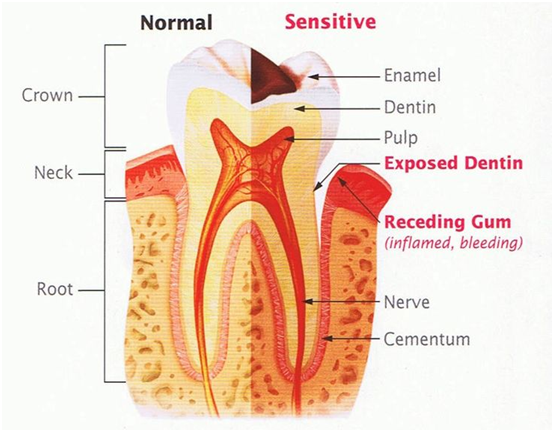
Tooth sensitivity, also called dentin hypersensitivity, occurs when the protective layer called enamel wears down leading to dentin exposure that triggers sensitivity.
Causes of Tooth Sensitivity
- Enamel Erosion
Consumption of acidic foods and beverages, acid reflux can cause loss of enamel due to acid attack. - Gum Recession
Brushing too hard using a hard-bristled brush or wrong brushing technique can lead to enamel wear down overtime particularly where the crown meets the gums leading to dentin exposure. Gum diseases also cause exposure of the tooth roots and teeth become more sensitive. - Tooth grinding habit
Tooth grinding habit called bruxism can cause the enamel to be worn away. - Other Contributing Factors
Other common factors include tooth decay, fracture or trauma to the tooth, recent fillings also lead to sensitivity. Teeth whitening procedures or bleaching can cause temporary sensitivity of the teeth.
Symptoms of Tooth Sensitivity
Common symptom of tooth sensitivity is a short, sharp pain in response to cold, hot, sweet, or sour foods. The discomfort resolves once the stimulus is removed.
Diagnosis
To properly diagnose tooth sensitivity, careful history taking, clinical and diagnostic tests are required.
Treatment and Management
- A. At-Home Remedies
Desensitising toothpastes which contain compounds that help block sensation travelling from the tooth surface to the nerve can be used as home remedies.
B. Professional Treatments
Depending on the cause,
• Your dentist may recommend in-office dental treatments like application of desensitising agents to the affected parts of the teeth, a filling or a crown.
• If the gum has receded, a gum graft placed surgically may be recommended to cover the root which reduces the sensitivity.
• In cases in which severe hypersensitivity cannot be treated by any other means, root canal treatment is suggested to eliminate the problem.
Prevention
Limit the consumption of acidic foods and beverages. Practise proper oral hygiene including regular tooth brushing and flossing. Choosing the right toothbrush and paste can also make a difference. Always use a soft bristled toothbrush and less abrasive toothpaste. Get treated if you have bruxism. Using a mouth guard can protect teeth from further wear and reduce sensitivity.
Conclusion
Tooth sensitivity is a common problem impacting many people and is a matter of growing concern at present times. The ultimate goal in treating this condition is to provide immediate and long lasting relief of the associated pain. Implementing good oral hygiene practices and seeking timely professional dental care are crucial in effectively addressing tooth sensitivity and ensuring optimal oral health.